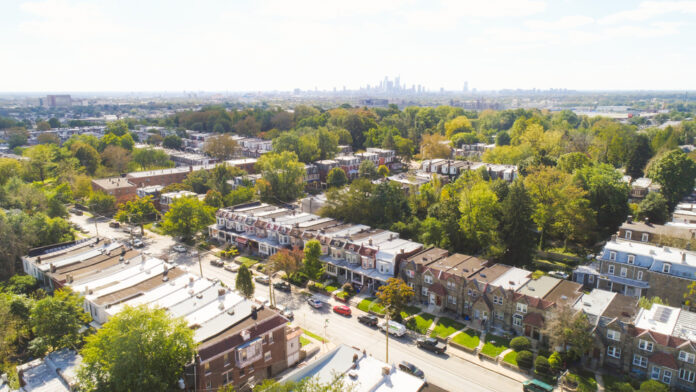


Central New Jersey has long been one of the more distinctive housing markets in the Northeast – dense, diverse, and driven by a buyer pool unlike almost anywhere else in the country. As the spring 2026 selling season reaches its peak, the market is showing both resilience and real strain, depending on which segment you look at. For agents working the ground level in Middlesex and surrounding counties, the picture is more nuanced than broadly optimistic headlines about suburban New Jersey suggest.
Sonia Banota, a licensed realtor with Better Homes and Gardens Real Estate Maturo Realty Group, has spent a decade working in Central Jersey’s layered market. With more than 40 transactions closed in 2025 across sales, purchases, and rentals, she offers a useful lens into what is actually moving, what is stalling, and why.
Community Drives Demand
To understand Central Jersey real estate, it helps to understand who is buying there. The area, which spans roughly 25 townships within Middlesex County alone, has become a significant destination for South Asian and Southeast Asian immigrants and professionals, many of them drawn by strong school districts and established community infrastructure.
That cultural anchoring creates a consistent demand base – transplants from New York, recent immigrants looking to purchase their first home, and move-up buyers stepping out of townhouses into single-family homes. It also means the market is unusually sensitive to immigration policy and visa conditions, a factor that has become increasingly relevant in 2026. “For a lot of people who are from South Asia or Southeast Asia, this is like a piece of home,” Banota says.
Buyers vs. Waiters
The most significant development Banota has observed this season is a clear divide in buyer activity along lines of immigration status. Visa holders are largely sitting out, while citizens and green card holders are the ones making purchases. During buyer consultations, visa status and employment stability have become essential questions for gauging whether someone is genuinely ready to buy.
Given that a substantial portion of Central Jersey’s buyer pool historically consists of H-1B and other visa-holding IT professionals, this hesitation has had a measurable effect on demand. Uncertainty around visa renewals and broader immigration policy has made would-be buyers reluctant to commit to a long-term purchase.
Mortgage rates are compounding the issue. With inflation remaining persistent and rates staying elevated, affordability has become a central conversation in nearly every buyer consultation. Banota notes that even a small rate decrease would bring buyers back, while any increase pushes them further to the sidelines. The practical result is that agents are increasingly working backward from monthly payment capacity to determine what price range a buyer can realistically target.
Sellers Adjust Slowly
The lock-in effect that kept many homeowners from listing – unwilling to trade a low fixed-rate mortgage for a higher one – is beginning to ease. Inventory in Central Jersey is modestly higher this spring compared to last year. But the increase in available homes is arriving at a moment when the buyer pool has contracted.
That mismatch is putting pressure on the pricing strategy. Banota’s approach to listing appointments leans heavily on data – days-on-market trends, inventory levels, and comparable sales – to help sellers calibrate expectations. Some sellers accept the data and price competitively. Others insist on testing higher numbers and watch their listings sit.
The risk of overpricing is not just a slower sale. Buyers have become attuned to how long a property has been listed. “The minute they are on the market for three or four weeks, buyers know the price is high, and they start negotiating,” Banota explains.
Her strategy for a ranch listing in Monroe illustrates the alternative approach. Priced at $1 million despite a higher valuation, the listing drew multiple offers above $1.1 million. Competitive pricing, in the right conditions, can still generate meaningful upside.
Move-In Risk
Buyer preferences this season point clearly in one direction: homes that require no immediate work are drawing stronger offers and faster closings. Renovated kitchens, updated bathrooms, finished basements, and well-maintained outdoor spaces all contribute to quicker sales and higher prices. “Those kinds of houses are selling faster,” Banota says.
For sellers considering whether to invest in pre-listing updates, even modest cosmetic improvements – a new countertop, a fresh backsplash – can meaningfully affect how quickly a home moves and at what price.
Even when buyers and sellers agree on terms, financing remains the most common reason transactions fail to close. Banota points to a recent example where a buyer attempted to retain their current home as a rental while purchasing a new one. The resulting debt-to-income ratio issues led to a loan denial. As buyers stretch to afford higher-priced homes in a rate environment that limits purchasing power, these financing complications are likely to remain a recurring obstacle.
Market Holds Firm
Despite the headwinds, the Central Jersey market has not stalled. Well-priced properties listed this spring have generally sold within one to three weeks, and million-dollar homes are still attracting multiple offers. “Even though we have fewer showings and fewer people coming to open houses, there are still people with the money who are looking to buy in the area,” Banota says.
The durability of demand in this market comes back to the same factor that has always defined it: community. As long as Central Jersey continues to offer the school quality, cultural familiarity, and neighborhood infrastructure that draw its core buyer demographic, the fundamentals remain intact. The current period of adjustment – more inventory, fewer active buyers, longer days on market for overpriced listings – mirrors broader national conditions more than any structural weakness in the local market.
What happens next depends largely on forces outside the region’s control. If mortgage rates ease even modestly, pent-up demand from sidelined buyers could re-enter the market quickly. If immigration policy tightens further, the buyer pool that has sustained Central Jersey’s growth could shrink in ways that take longer to recover from. For sellers, the clearest takeaway is to price with the market, not against it. For buyers with the financial standing to act, the slight easing of competition compared to the frenzy of recent years may represent a reasonable window – though one that could close quickly if conditions change.
About the Expert: Sonia Banota is a licensed realtor with Better Homes and Gardens Real Estate Maturo Realty Group, covering Central Jersey across Middlesex County and surrounding areas.
This article is based on information provided by the expert source cited above. It is intended for general informational purposes only and does not constitute legal, financial, or real estate advice. Readers should conduct their own research and consult qualified professionals before making any real estate or financial decisions.