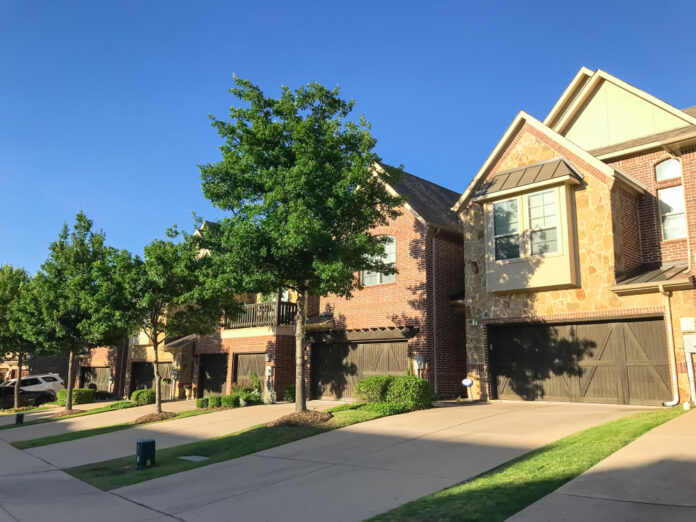

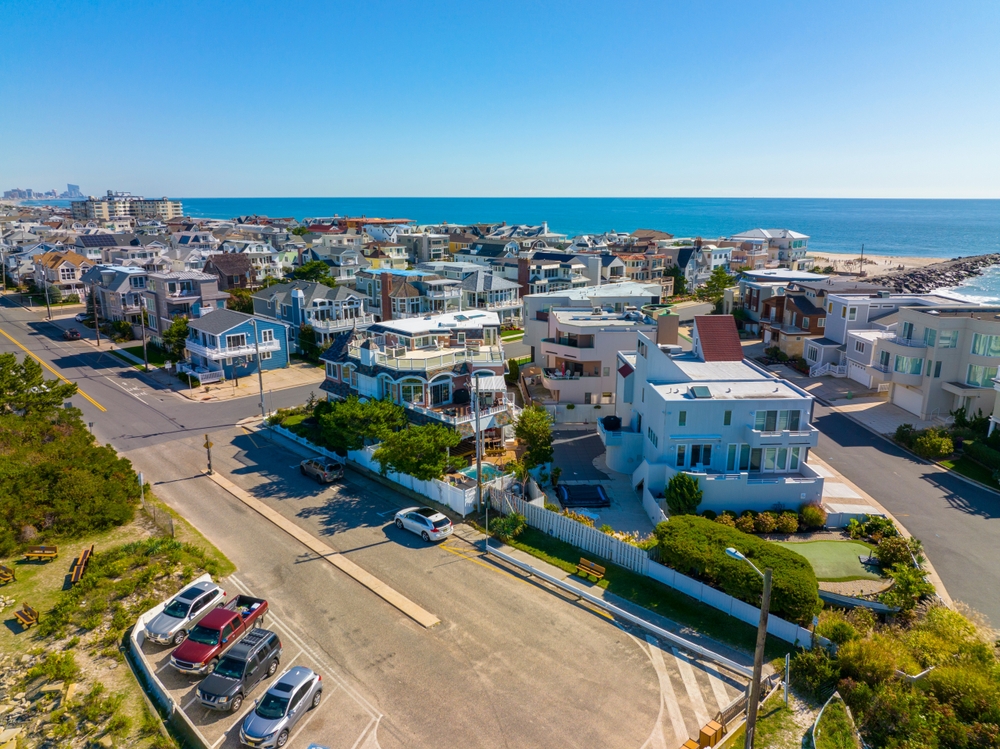
A recent executive order aimed at limiting large institutional investors in the single-family home market was broadly framed as a win for individual buyers. But in aging coastal communities already struggling with skilled-labor shortages, the policy is producing an unintended consequence: a growing inventory of older properties that neither institutional buyers nor individual purchasers can absorb.
According to Jenya Parvanova, Real Estate Associate at RE/MAX Coastal in Brigantine, New Jersey, the removal of large investors from these transactions has exposed a gap the market has yet to close. In markets like Atlantic County, institutional buyers often served as the mechanism by which distressed or deteriorating properties were acquired, renovated, and returned to usable condition. They brought capital, contractor relationships, and project management capacity that most individual buyers – particularly first-time homebuyers – lack.
“We are in the market of aging properties, and not having that middle man, which was the large investors, combined with the lack of skilled labor force, creates a gap,” Parvanova says.
Capital Exits, Rehabilitation Stalls
With institutional capital now restricted from the market, older properties requiring significant rehabilitation are sitting in limbo. They’re priced beyond what a first-time buyer can absorb after factoring in renovation costs. Still, they’re no longer attractive to the institutional buyers who previously would have taken them on. The result is inventory that doesn’t move and communities that can’t refresh their housing stock.
This dynamic is particularly acute in shore markets, where a significant portion of the housing inventory consists of older seasonal properties maintained to varying standards over decades of part-time occupancy. The deferred maintenance common in vacation properties compounds the rehabilitation challenge, making these homes even less accessible to buyers without renovation experience or capital reserves.
Labor Shortages Compound
The workforce constraints limiting property rehabilitation are also tied to another pressure point in coastal New Jersey: the hospitality sector. The two problems feed each other in ways that make both harder to solve.
Parvanova points to Atlantic City, the closest major employment center, as a place where the labor shortage is most visible. Casino operators and other large hospitality employers cannot easily import labor from outside the region without providing housing, and the regional market offers limited affordable inventory for workforce residents.
“The casinos and the big players – they cannot bring all of their labor force from outside because they need to provide them a place to live,” Parvanova says, “and our inventory is very scarce.”
The circularity of the problem is notable: labor shortages limit the renovation of older properties, which limits housing supply for workers, which deepens labor shortages. Policy interventions that restrict one category of buyer without addressing the underlying supply and labor constraints may accelerate this cycle rather than interrupt it.
Employer-Linked Grants
With interest rates unlikely to drop meaningfully in the near term and institutional buyers sidelined, the question becomes what tools remain to connect available inventory with qualified buyers. Parvanova argues that targeted down payment assistance programs – particularly those linked to specific employers – represent one of the more practical options currently available.
In the South Jersey market, some of the region’s largest employers, including a major hospital system, offer supplemental grant funds that employees can apply toward a down payment when purchasing in the area. Neighborhood-specific programs also exist, though Parvanova notes that awareness of these resources is uneven even among local agents.
“We have specific grants for, let’s say, the bigger hospital that we have,” Parvanova says. “In case you’re working for them, you will get more funds applied towards your down payment purchase. This is information that not even all of the local agents are familiar with.”
For workforce buyers – the hospitality and healthcare workers that regional employers are struggling to retain – these programs could make the difference between purchasing locally and commuting from further away or leaving the region entirely. Down payment assistance that reduces upfront costs may be one of the few ways to expand the pool of buyers who can act on aging inventory that would otherwise sit idle.
What Comes Next
Whether employer-linked grants and neighborhood-specific assistance programs can meaningfully offset the combined pressure of investor restrictions, labor shortages, and elevated rates remains unclear. The scale of the problem – aging housing stock, limited renovation capacity, and a shrinking workforce – likely exceeds what scattered grant programs can address on their own.
But the situation illustrates a broader tension in housing policy: restricting one category of buyer without creating alternative pathways for property rehabilitation leaves gaps that individual purchasers cannot easily fill. In coastal communities where seasonal use has deferred maintenance for decades, and skilled tradespeople are in short supply, the path from deteriorating property to habitable home requires more than a willing buyer – it requires capital, expertise, and labor that the current market is not reliably producing.
Agents and institutions that understand how available financial tools interact with these local conditions may be better positioned to move transactions that would otherwise stall. But closing the gap fully will likely require interventions beyond what any single program or policy can deliver.
About the Expert: Jenya Parvanova is a Real Estate Associate at RE/MAX Coastal in Brigantine, New Jersey, focused on residential real estate in Atlantic County and the surrounding coastal New Jersey market.