

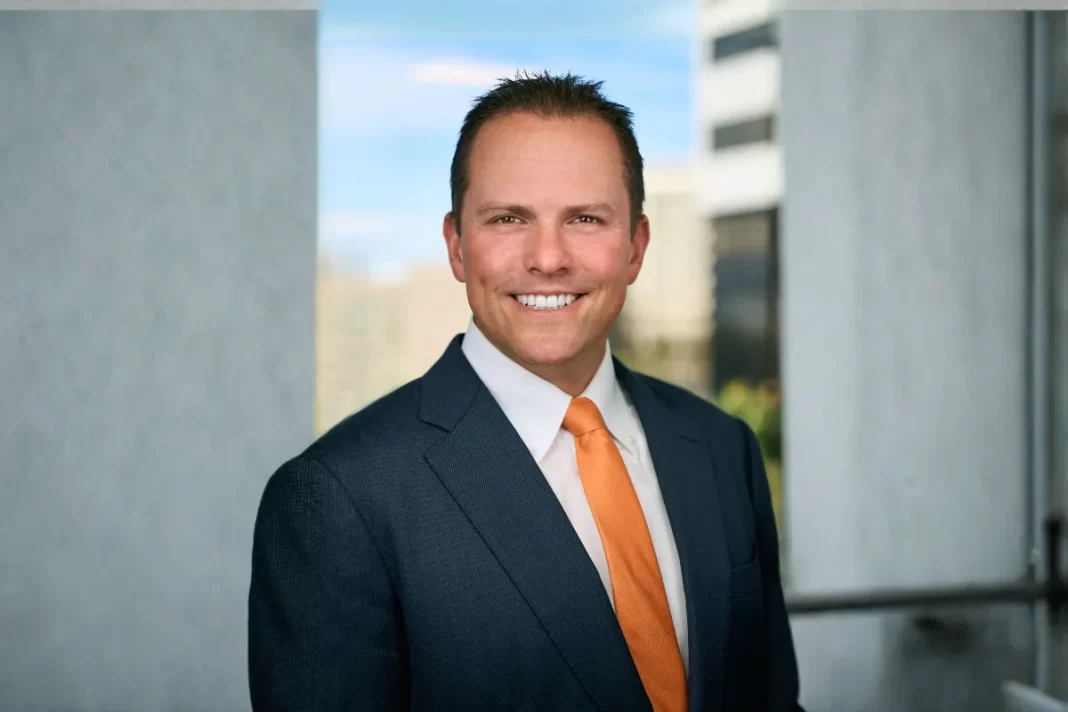
The Bay Area development landscape has become increasingly challenging in recent years. Rising interest rates and economic uncertainty have forced many firms to scale back or close operations. For Erik Hayden, founder and managing partner of Urban Catalyst, these disruptions have led to a series of strategic pivots that go beyond traditional real estate development.
From Engineering to Real Estate
Hayden began his career with an engineering degree from the University of Washington, specializing in electrical engineering and microprocessor circuit design. The dot-com crash of 2001 upended his plans for a tech career, prompting a move to San Francisco in search of work.
“I could not get a job as an electrical engineer up in Seattle,” Hayden recalls. “I thought maybe if I moved to San Francisco, closer to Silicon Valley, I could find a job in my field.”
Instead, Hayden entered the construction industry, working as an owner’s representative for Swinerton, one of California’s largest general contractors. In 2005, a pivotal project meeting clarified his ambitions. “I sat in that meeting, and I kind of looked at my boss, and I kind of looked at that guy, the developer, and I went, ‘I don’t want to be my boss. I want to be that guy.’”
This realization set Hayden on a path through roles in land acquisition and development at firms such as SummerHill Homes and Republic Urban Properties. He embraced unfamiliar challenges, often learning by doing. “I can’t help but jump into things that I have no experience doing and figure them out,” he says. “I have my growing pains as I go.”
Launching Urban Catalyst
After years of working for others, Hayden launched Urban Catalyst in 2018 as a private equity fund focused on ground-up development in downtown San Jose. The timing was favorable: downtown San Jose was attracting new investment, and the federal Opportunity Zone program gave the firm a competitive advantage.
“If you’re going to be a small, first-time fund manager, and you’re going head to head with Blackstone, you better have a niche,” Hayden notes. “And so I decided to be an opportunity zone fund. We were the 10th fund in America.”
Urban Catalyst’s early fundraising exceeded expectations. By using digital marketing on Google, Facebook, Instagram, and YouTube, the firm raised $50 million in its first year, scaling to $85 million annually by 2021. In total, Urban Catalyst raised over $300 million across its funds and attracted more than 1,000 investors, according to Hayden.
Market Disruption and Rapid Adjustments
The arrival of COVID-19 and the subsequent rise in interest rates dramatically changed the development environment. “When COVID happened, we were unable to get financing from banks and third-party equity groups to build our projects, because people were scared,” Hayden explains.
Conditions worsened in 2022 when the Federal Reserve raised interest rates aggressively. “Interest rates impact all businesses, but disproportionately and negatively impact real estate development,” he says.
Several projects required major changes. A senior living project is being converted to apartments, and two planned high-rise developments are being redesigned as eight-story buildings. Hayden is blunt: “High rise is not financeable.”
Opportunities Amid Industry Retrenchment
Despite recent setbacks, Hayden sees opportunity in the current market. He describes large developers and equity funds as moving in lockstep, often reacting too quickly to market swings.
“The groups are all like lemmings – one runs and jumps off a cliff, they all follow,” Hayden observes. “Single family home builders are having a panic attack. They are firing everyone. They’re dropping all of their projects. They look at things on a quarter-to-quarter basis.”
Hayden argues that developers who can take a longer-term view are better positioned. The Bay Area’s persistent housing shortage means demand far outstrips supply. “The housing market here in the Bay Area, we have an infinite supply of demand. We couldn’t build enough housing if we tried.”
Lessons in Resilience
Hayden’s approach to adversity is methodical. He spends time analyzing problems before moving forward. “I try to completely understand the issues, and then I have to think about it. It usually takes me a day or two,” he explains. “It’s almost like my subconscious thinks about it – like a little mini aha moment where you go, ‘Oh, this is so simple. I know exactly what we need to do.’”
Looking Ahead
Hayden is confident about the firm’s future. “Our second fund is going to be fine. Our third fund is going to perform exactly as anticipated, and it’s doing great,” he says.
Hayden’s combination of experience, diversification, and analytical rigor positions Urban Catalyst for the next real estate cycle. He aims to maintain the mindset that has helped him weather multiple industry downturns while focusing on tangible value creation.
As the Bay Area real estate market eventually stabilizes, developers like Hayden who have adapted through strategic changes and operational discipline may be best prepared to capitalize on renewed demand and opportunities created by industry consolidation. The lessons learned from recent turbulence will shape the next phase of growth in one of the country’s most supply-constrained housing markets.