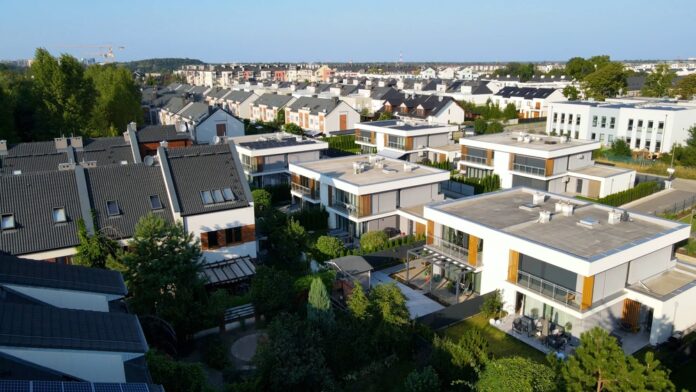


Small multifamily housing remains severely undersupplied in Sacramento. A combination of regulatory loosening and an underused FHA program could create a meaningful entry point for first-time buyers and small investors.
Sacramento’s residential real estate conversation tends to center on single-family homes: prices, rates, inventory, and buyer sentiment. But one of the most overlooked opportunities in the market sits in a product category that builders have largely avoided — duplexes, triplexes, and fourplexes. Christopher Brown, principal broker at NEXT Real Estate Group, ERA Powered, says regulatory barriers and a difficult insurance environment have kept small multifamily construction suppressed in California. That supply gap is only now beginning to ease. For investors and first-time buyers willing to look past the single-family market, Brown argues the opportunity is real and underappreciated.
Why Builders Avoid Small Multifamily
The shortage of small multifamily housing in Sacramento is not accidental. Brown says the economics of building duplexes and small multifamily units in California have been rendered nearly unworkable by regulatory costs and an insurance market that is increasingly hostile to builders and owners alike.
The burden includes permitting costs, impact fees, and zoning requirements that impose significant expenses without a proportional increase in revenue. Combined with California’s insurance crisis, which has pushed carriers to exit the state or dramatically raise premiums, margins on small multifamily construction have compressed. Many builders have redirected capital toward single-family homes or larger apartment developments, where scale provides some relief.
“It is really difficult to build that type of product in California right now because of the regulations and the insurance market,” Brown says. “But I see some gaps where that’s going to start to break.”
The result is a market where demand for affordable rental-offset housing exists, but supply has not kept pace. Brown sees that imbalance as an opening for investors who can navigate the current environment and position ahead of an expected regulatory loosening over the next few years.
FHA Loans Few Buyers Know
Beyond the supply gap, Brown highlights a financing structure he says is rarely discussed with buyers: FHA loans for owner-occupied duplexes. Under this approach, a buyer purchases a duplex, lives in one unit, and rents out the other. The rental income offsets a portion of the mortgage payments, reducing the buyer’s housing costs while building equity in a two-unit asset.
The FHA owner-occupant program allows buyers to finance a two- to four-unit property with a lower down payment than conventional investment loans typically require, provided the buyer occupies one unit. For buyers struggling to accumulate a down payment, which Brown identifies as a primary friction point in Sacramento’s market, this structure can make entry into real estate investing accessible when it would otherwise be out of reach.
“Owner-occupied duplexes are a great opportunity for that first-time investor,” Brown says. “There’s an FHA program designed just for that, and I don’t think it’s talked about enough.”
Brown’s observation points to a broader gap in how real estate professionals advise first-time buyers. If agents are primarily oriented toward single-family resale transactions, they may not surface financing options and property types that could better serve their clients’ long-term financial interests.
Investor Strategy: Land and Partnerships
For investors with more capital and a longer time horizon, Brown sees a different entry point. He describes a model in which investors partner directly with builders to fund small subdivision projects, including multifamily units, in exchange for returns on the development. Brown says his firm is already executing this model with several investors.
“If you’ve got capital that’s looking for a solid return and is patient, that’s a great place to be investing with builders like us,” Brown says.
This approach requires patience. Brown characterizes land and subdivision plays as three- to ten-year investments, depending on the parcel and entitlement timeline. For investors who can tolerate that horizon, Sacramento’s land availability and population growth make it more attractive than many other California markets, where land constraints and regulatory costs are steeper.
According to recent U.S. Census data, Sacramento is among the few major California regions still recording net population in-migration, which strengthens the long-term demand case for rental-generating properties. As Sacramento continues to attract Bay Area transplants, remote workers, and companies relocating from higher-cost metros, demand for affordable housing options, including small multifamily units, is likely to grow.
Acting Before Regulations Ease
These trends converge at a moment Brown frames as a narrow window, before regulatory conditions improve and competition for small multifamily products increases. Some builders and development firms are watching the same signals, though few appear to have moved aggressively into this space yet. For investors and buyers who move early, that lag may be the opportunity.
Whether California’s regulatory environment will ease sufficiently to unlock broad small multifamily development remains uncertain. For investors and buyers willing to act before that easing becomes apparent, the supply gap in Sacramento’s duplex and small multifamily market may represent one of the more durable opportunities in the region’s residential landscape over the next several years. The question is whether enough buyers and investors recognize it before competition catches up.