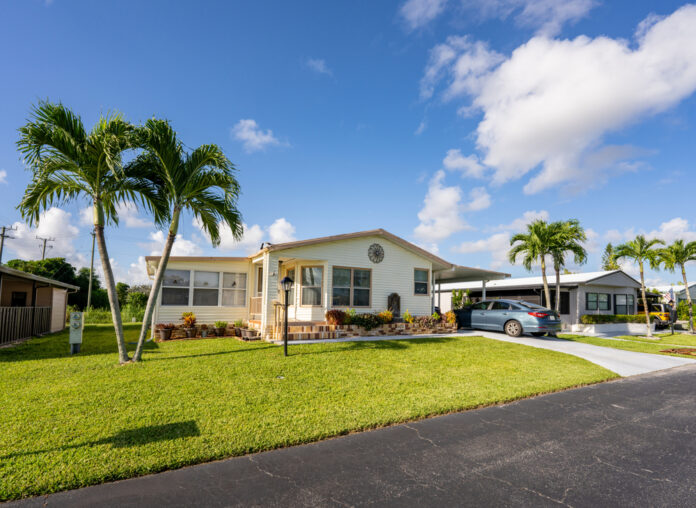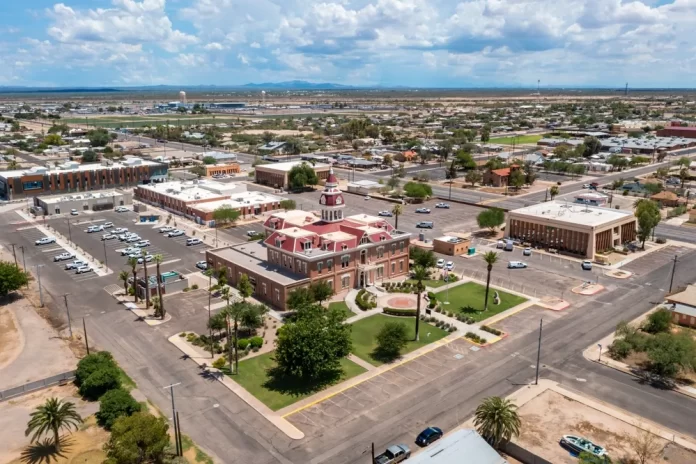


Arizona’s assured water supply certificate requirement has stalled residential development in Pinal County for nearly a decade, even as nearby regions facing identical restrictions resolved the issue within months. Since 2013, the Arizona Department of Water Resources (ADWR) has blocked new residential subdivisions in Pinal County by labeling all pending water certificate applications “incomplete” without specifying what was deficient. West Phoenix faced the same restrictions a few years ago, but saw residential development resume in less than a year. The disparity raises questions about whether the freeze reflects genuine water scarcity or inconsistent enforcement of regulations.
How Incomplete Designations Blocked Pinal County Development
Stephen Miller, District 3 Supervisor for Pinal County, describes the state’s approach as a de facto moratorium. The ADWR stopped short of a formal building ban, but declaring every application incomplete effectively halted development. “They deemed all the applications that had been submitted incomplete. But trying to understand what was not complete about my application was the difficult challenge,” Miller says.
Developers could neither proceed with projects nor appeal a formal denial. The state provided no concrete feedback, leaving applicants unable to correct or resubmit their proposals. For landowners who had already secured residential zoning, this meant years of carrying costs with no path to revenue or project advancement.
Pinal County commissioned independent modeling on aquifer depletion and found the outlook less dire than ADWR projections suggested. Miller contends the restrictions are not based solely on hydrology. “We spent a lot of money proving that wrong,” he says.
Why West Phoenix Recovered Faster Than Pinal County
West Phoenix was placed under the same water certificate restrictions roughly three and a half years ago, but it cleared the way for new development within a year. “Within a year, West Phoenix has already resolved their issues and can move forward,” Miller says. “And here we sit nine or ten years later in Pinal County, and the state still hasn’t freed us up yet.”
The disparity suggests regulators may weigh factors beyond water availability, including political influence and proximity to the Phoenix metro. Pinal County, while growing rapidly, has less political clout and sits outside the urban core. Miller acknowledges that politics likely plays a role: “There’s always in all of this stuff a political component at some level.”
For developers, the West Phoenix example is both a source of hope and frustration. It demonstrates that the state can act quickly when it chooses, while highlighting the apparent arbitrariness of the freeze in Pinal County. Local builders continue to wait for a policy shift that, by Miller’s account, hinges more on political priorities than hydrological evidence.
Prolonged Freeze Forces a Shift Toward Rental Construction
The prolonged freeze on water certificates has forced developers in Pinal County to rethink their strategies. Under normal conditions, Miller notes, moving a residential project from concept to groundbreaking already takes several years due to flood, transportation, and zoning requirements. The certificate issue has added an indefinite delay to that timeline.
Developers who secured water certificates before 2013 have been able to continue building, creating a split market. “There were close to 20,000 lots with certificates,” Miller says, referring to inventory in Casa Grande. “Two thousand homes a year is a lot.” Once that inventory is exhausted, new subdivision construction will halt unless the state changes its position.
The freeze has redirected development toward rental housing, which does not require a water certificate. This workaround has allowed the county to accommodate some population growth, but it has altered the housing mix and limited options for prospective homebuyers.
Wastewater Recharge Could Ease Pinal County Water Constraints
Miller argues that expanding wastewater processing and aquifer recharge could address both water supply concerns and development constraints. “The supply of water and the processing of wastewater are sometimes the controlling factors to be able to move forward with a project,” he says. Wastewater recharge is a proven method for replenishing aquifers, but Arizona regulations restrict most counties from operating sanitation districts.
Currently, only Pima County holds legal authority to run a sanitation district. The population threshold for forming one is set too high for Pinal County to qualify. Miller believes that the threshold should be lowered for counties facing acute water challenges, arguing that greater local control over wastewater infrastructure would allow developers to advance projects without state intervention.
Miller sees wastewater reuse as a significant opportunity for Arizona. “We do know that we can take wastewater and recharge it back into the aquifer. It’s a plus. It’s a positive. And we should be leading the nation in that,” he says.
State Law Converts Agricultural Water Rights for Urban Use, With Limits
Recent state legislation allows agricultural water rights to be converted for urban development. Miller says the law’s impact will be gradual. The legislation required the Arizona Water Company to achieve a specific designation before conversions could begin in Pinal County. “I understand Arizona Water has achieved that status now. So there’ll be some water activity of some type going on here,” Miller says.
The agricultural-to-urban conversion pathway is not a universal solution. Each developer must independently secure a water source, and the cost and complexity will vary by project. “Everybody’s scenario is slightly different,” Miller says. “You’ll have to establish your own source of water.” The new law may unlock some projects, but it does not restore the streamlined certificate process that existed before 2013.
Pinal County Faces Ongoing Uncertainty Despite Recent Legislative Progress
For Pinal County, recent legislative changes represent incremental progress, not a comprehensive fix. Developers face higher costs and longer timelines than those in regions where water certificates remain available. Without a shift in state policy or new local authority over water infrastructure, Pinal County will remain at a disadvantage compared to neighboring areas.
The ongoing freeze illustrates the consequences of regulatory uncertainty and the need for clearer, more consistent state policies on water certificates. Until the state addresses the underlying approval process, residential development in Pinal County will continue to lag behind its potential, with broader implications for housing supply, affordability, and regional growth.