

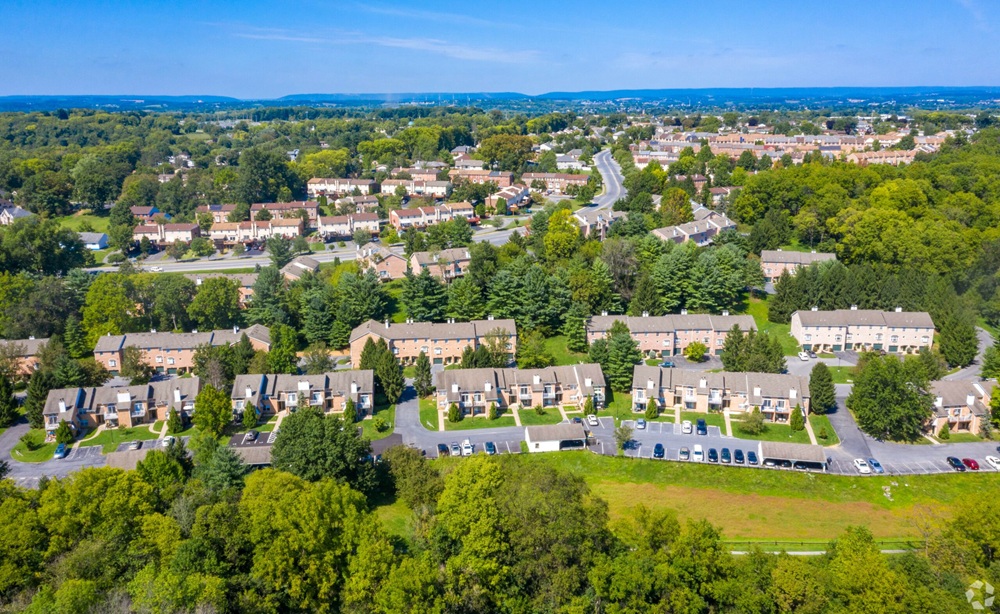
OneWall Communities has added 12 workforce housing properties to its third-party management portfolio spanning Texas, Florida, Georgia, Arkansas, and Kansas, expanding the Northeast-based operator’s total holdings to over 5,000 units and marking a strategic push into Southern markets.
The management contract additions represent OneWall’s focus on building its third-party services business in regions where recent syndication failures have created demand for institutional-quality property management among distressed buyers and overleveraged owners.
“There’s a real dearth of qualified institutional level property management to help some of those syndicators or buyers who are taking over those distress deals,” explains Ron Kutas, founder of OneWall Communities. “We’ve been very successful in building our book of business in the South.”
Capital Scarcity Creates Management Demand
The expansion capitalizes on a market dynamic where workforce housing fundamentals remain strong, but capital availability has contracted sharply. Property owners lacking access to liquidity are seeking management solutions rather than forced sales, creating opportunities for operators with institutional infrastructure.
“There are a lot of operators, owners, managers who do not have access to capital and therefore either have to sell or recapitalize their deals, and that’s where we see a lot of opportunity to come in and assist in those situations,” Kutas notes.
Institutional investors withdrew from the sector after inexperienced operators who entered during the recent appreciation cycle failed to manage the asset class’s operational complexity, leaving current owners in need of experienced management partners.
“I think that in the last decade, when real estate valuation just kept going up, it was very easy to invest in real estate and make money,” Kutas says. “Unfortunately, the workforce housing subsector is one that requires more capital for CapEx as well as a harder asset type to manage. Investors who invested with inexperienced operators got burned.”
Integrated Model Distinguishes Service Offering
OneWall’s vertically integrated structure, combining property management with asset management under single ownership, positions it differently than traditional fee-based property management firms in serving third-party clients.
Traditional property management companies operate under fee structures emphasizing revenue metrics like leasing velocity and rent maximization. OneWall’s owner-operator background informs property-level decisions through an investment lens.
“Property management firms that don’t have in-house asset management are motivated by different factors at the property level,” Kutas explains. “Usually they are just really revenue driven. They’re there to lease the units and try to get the highest rents. That’s how they get paid. But they’re not necessarily aligned with ownership or with asset management in terms of how to reduce expenses or what to look at from a business standpoint to add value.”
Expense optimization consistently emerges as immediate value-add opportunity when OneWall assumes management from previous operators.
“We’ve seen property management companies that really don’t view the expense side as something that they need to really hone in on, and it’s just going to be paid for,” Kutas notes.
Southern Markets Offer Growth Runway
The geographic expansion into Texas, Florida, Georgia, Kansas, and Arkansas targets markets with fewer institutional-quality management options compared to OneWall’s established Northeast presence.
The firm’s ability to add 12 properties to its management portfolio in recent months represents unusual growth velocity and suggests substantial unmet demand for experienced workforce housing operators in Southern markets.
OneWall evaluates management opportunities through systematic assessment of market fundamentals, physical condition, and business plan viability. Market analysis focuses on employment base characteristics and job stability within the immediate geography. Physical evaluation quantifies deferred maintenance and projects capital expenditure requirements.
“All three of those things have to be looked at very closely before we make a decision to move forward,” Kutas says.
Implications for Workforce Housing
The 12-property management expansion suggests workforce housing owners are increasingly seeking institutional-quality operational partners rather than managing properties internally or using local management firms lacking specialized expertise in the asset class.
OneWall’s rapid Southern growth indicates the region’s relative lack of institutional management infrastructure compared to the Northeast may provide continued expansion opportunities for sophisticated operators.
For the attainable housing sector, the trend toward experienced third-party management may improve operational standards across workforce housing stock as distressed owners and new buyers of troubled properties engage firms with vertically integrated platforms and owner-operator perspectives.
OneWall Communities provides integrated property and asset management for workforce housing properties across Northeast and expanding Southern markets. The firm now manages over 5,000 units serving working-class residents in Class B multifamily properties.
Disclosure: Individuals or companies mentioned may have a commercial relationship with KeyCrew.
Disclosure: Individuals or companies mentioned may have a commercial relationship with KeyCrew.