

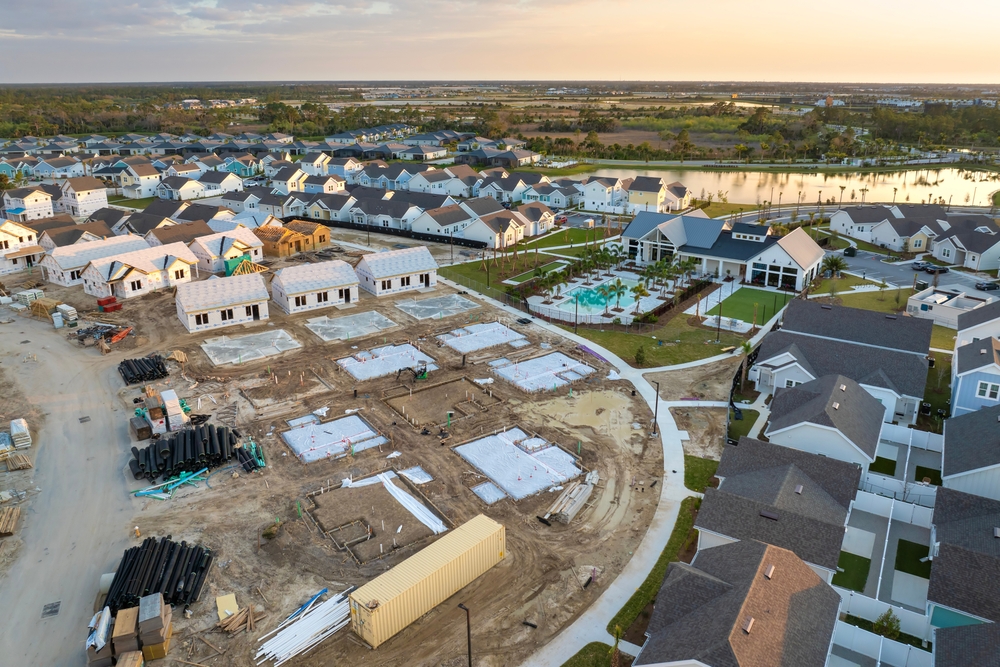
Institutional investors are shifting multifamily capital away from Sun Belt hotspots and toward overlooked Midwest cities as oversupply weakens returns in once-booming metros. According to Dusten Hendrickson, founder and president of Mailbox Money Real Estate and Private Equity, the development surge that began in 2020 has created a glut of new units, pushing investors toward less-crowded markets.
“Every market that was the hottest in 2020, you don’t want to invest there right now because there’s so much stuff that got constructed,” Hendrickson says. “This is the hottest market of 2020; it’s the worst market of 2026.”
This reversal is the result of capital flooding into the same high-growth metros during the pandemic, triggering a wave of new construction that has since saturated those markets. Meanwhile, secondary Midwest cities with steady job growth and limited new supply are emerging as more attractive destinations for workforce housing development.
Sun Belt Oversupply Shifts Investment
The main driver behind the shift is the concentration of new construction in a handful of high-profile markets. Developers and institutional investors targeted cities such as Austin, Texas; Phoenix; and Nashville, Tennessee, drawn by rapid population growth and rising rents. That wave of investment triggered a construction boom that has since left these markets oversupplied, with falling rents and declining occupancy rates.
Hendrickson points to Sioux Falls, South Dakota; Rochester, Minnesota; and Ankeny, Iowa, as markets with strong fundamentals that national investors have largely ignored. Markets with job growth and limited supply now offer better risk-adjusted returns than those with excess inventory, regardless of past growth rates. Hendrickson emphasizes that employment trends and supply-demand balance are the most critical metrics, not population growth alone.
“You have to look for where the jobs are, where the growth is going to be,” Hendrickson says. “If there’s growth and it’s undersupplied, it’s a boom. It’s a great market to be in.”
Midwest Markets Cut Operating Costs
Beyond undersupply, Midwest markets offer operational benefits that improve project economics. Hendrickson reports lower bad debt, fewer concessions, and less competition than in coastal or Sun Belt markets. These factors reduce operating costs and stabilize cash flow, which matters most given current interest rate volatility.
Hendrickson also notes that community banks in the Midwest often carry mandates to finance projects that address housing shortages. Those mandates can result in more favorable lending terms. Mailbox Money has secured construction loans at roughly 6% interest, with five-year terms and three years of interest-only payments, terms Hendrickson describes as increasingly rare in more competitive markets.
“We target municipalities that need workforce housing, and usually community banks have a mandate,” Hendrickson says.
Tenant stability is another advantage. Midwest renters tend to be less transient, which leads to longer lease terms and lower turnover costs. As rent growth stalls and operators focus on maintaining occupancy, tenant stability becomes a key factor in project success.
Institutions Expand Beyond Top Cities
Hendrickson believes institutional investors will shift focus to secondary Midwest markets, not by preference but by necessity. With major metros oversupplied and rent growth flat or negative, institutions need markets where development is viable and assets can generate steady returns.
“Institutions are going to have to look beyond the top cities they’ve always targeted, because the oversupply is so bad right now,” Hendrickson says.
The transition may take time, as institutions tend to prefer markets with established transaction volume and comparable sales data. Even so, economic fundamentals are driving the change. Kansas City, Missouri; Indianapolis; and Columbus, Ohio, are now on Mailbox Money’s target list, all offering stronger supply-demand dynamics than the coastal and Sun Belt markets that dominated capital allocations in recent years.
The shift underscores a recurring lesson in real estate cycles: when too much capital chases the same opportunity, oversupply erodes the returns that initially attracted investors. Hendrickson argues the Midwest has been overlooked because it lacks the high-growth narrative that Sun Belt cities project. Yet that lack of attention has preserved a healthier supply-demand balance and stronger project economics.
Mailbox Money Scales Midwest Pipeline
To capitalize on these trends, Mailbox Money is expanding its development pipeline across the Midwest. The company is building projects in Sioux Falls, South Dakota; Rochester, Minnesota; and Ankeny, Iowa, and is targeting Kansas City, Missouri; Indianapolis; and Columbus, Ohio, for future development. Hendrickson says the firm is approaching 1,000 units per year in production, up from 500 to 600 units.
“We just have to raise a little more equity. If we had one institutional partner that could write a $50 million check, we’d get pushed over the hump,” Hendrickson says. Hendrickson reports that projects are stabilizing quickly, with occupancy reaching 80% to 95% before construction crews leave, making it easier to secure permanent financing and scale operations.
Mailbox Money builds in suburbs near parks and single-family neighborhoods, avoiding direct competition with other multifamily projects. That positioning reduces market risk and attracts tenants who want a quieter, residential setting but cannot afford to buy a home.
Midwest Outlook for Investors
As institutional capital confronts the limits of oversupplied markets, secondary Midwest cities are likely to attract increased investment over the next several years. The question is whether that capital will arrive quickly enough to meet workforce housing demand or eventually trigger another cycle of overbuilding.
For now, the Midwest’s stable job growth, limited supply, and supportive lending environment give developers and investors a clear advantage in seeking reliable returns. The lesson of the last cycle is clear: markets that avoided the construction frenzy of the past few years are now positioned to benefit as capital seeks the next opportunity.