
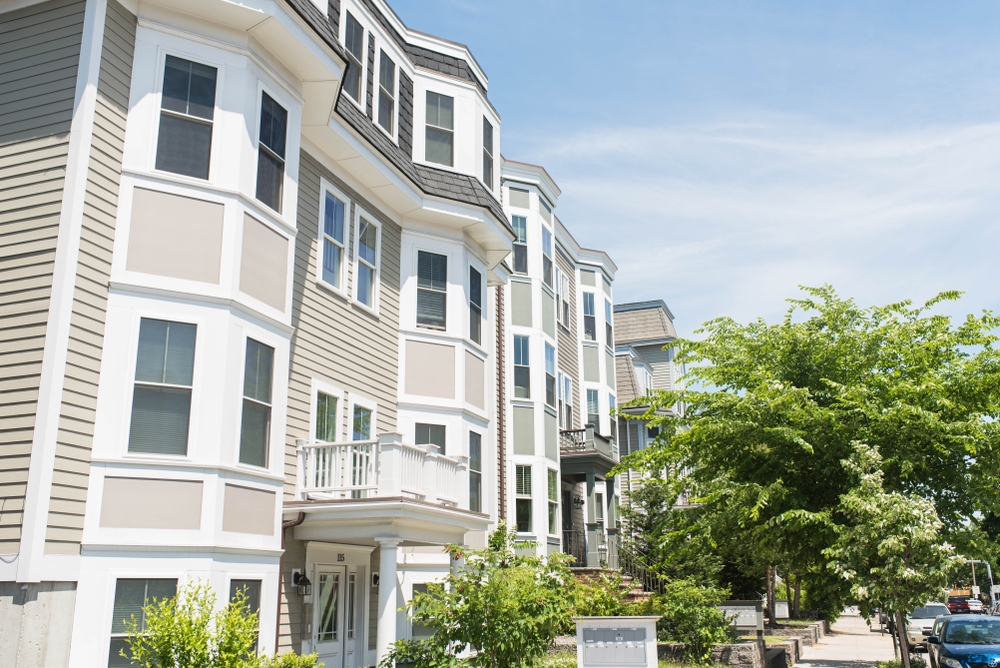
The longstanding strategy of buying a two- to four-unit property, living in one unit, and using rental income to cover the mortgage has become unworkable across Greater Boston and the North Shore. JJ Gallant, Senior Agent at Dina’s Realty LLC, says this change has effectively closed off what was once an accessible way for middle-class buyers to build wealth through real estate.
Gallant explains that it is now “almost impossible” to find a small multifamily property that passes the self-sufficiency test — the point at which rental income covers the mortgage, operating expenses, and leaves a modest profit. Properties that met this standard were common five years ago. Today, they have virtually disappeared.
This change has forced agents to adjust how they advise buyers. Instead of discussing potential profits, Gallant now focuses on how much rental income can help offset, but not cover, a buyer’s mortgage. “We’re not talking about turning a profit anymore. How much can we reduce your mortgage? That’s the conversation,” he says.
Investors Displace Middle-Class Buyers
Institutional and retail investors have flooded the market, purchasing multifamily properties at cap rates so low that immediate cash flow is often negative. Gallant says these buyers are betting on long-term equity appreciation, not on earning income in the early years of ownership. This approach requires significant cash reserves and a willingness to absorb losses while waiting for property values to rise.
Traditional investment metrics have been set aside. Until recently, experienced investors viewed properties with a 15% or higher year-over-year cash-on-cash return as obvious buys and those with 10–15% returns as strong acquisition candidates. “My old investor coach would say that’s something we’d wire cash for and purchase immediately,” Gallant says. “Savvy guys that own hundreds of units — not a couple — they say: if it doesn’t bring me 10%, it doesn’t make sense.”
Now, Gallant regularly sees properties sell above asking price even with cap rates as low as 3.2% and negative year-over-year returns. “Normally, I’d tell you you’re crazy to sell at a 3.2 cap rate with a negative 7% return. Those properties are selling over asking. Makes no sense,” he says.
This behavior echoes what has happened in Cambridge, where investors have long purchased properties at negative cap rates, betting that supply constraints and proximity to Boston would drive long-term price gains. Gallant notes that this strategy is spreading into previously affordable North Shore communities as gentrification moves outward from Boston.
Rising Rates Worsen Affordability Gap
Recent interest rate increases have further reduced the number of viable multifamily options for individual buyers. Gallant describes a client whose mortgage rate climbed from roughly 6.5% to 7.5% in under two weeks, eliminating properties that had appeared marginally feasible with a 25% down payment.
High property prices, low cap rates, and rising borrowing costs now limit competition to buyers with substantial capital or institutional backing. Gallant says the “1% rule” — where monthly rent should equal at least 1% of the purchase price — no longer applies in Greater Boston. Properties that meet this standard have vanished. For middle-class buyers who saved for a down payment and hoped to use rental income to offset housing costs, this route is now closed.
Wealth Gap Widens in Boston
This shift is not a temporary reaction to market cycles. Gallant argues it marks a structural change in who can use real estate to build wealth. Owner-occupied multifamily investment lets working- and middle-class buyers build equity while reducing housing costs. With this option gone, wealth-building through real estate is now largely limited to those with significant existing capital.
The impact is most visible in communities like Lynn, Chelsea, and East Boston, where updated three-family homes now routinely sell for well over $1 million. “If you told people that about Lynn even 10 or 11 years ago, they would have told you you’re crazy,” Gallant says.
Rising prices in these once-affordable communities reflect both gentrification and a chronic housing shortage across Greater Boston. Texas and Florida can expand multifamily construction rapidly on available land. Greater Boston lacks buildable sites, so supply cannot keep up with demand. This ongoing constraint supports continued price appreciation even as cash flow prospects worsen.
Outlook: Market Favors Wealthy Buyers
Gallant anticipates some moderation in condo prices over the next 10 to 12 months, particularly in East Boston and Chelsea, where inventory has grown. He expects multifamily properties to remain the most resilient segment, with price appreciation of 1% to 3% per year likely to continue. For buyers hoping to enter as owner-occupants, Gallant believes that the window has closed.
The disappearance of self-sustaining multifamily opportunities in Greater Boston signals a lasting change in the region’s housing market. As wealth-building through real estate becomes increasingly concentrated among those with substantial resources, access to ownership and the financial security it provides grows more limited. Sellers and agents must adjust to a market where investor demand, not owner-occupant affordability, drives prices and shapes local neighborhoods.