
For years, renting was understood as a temporary condition, something you did while you saved, while you waited, while you figured out where you wanted to land. Homeownership was the destination. Renting was the road.
That framework is breaking down. Across the country, renters who expected to buy are staying put longer than they planned, not because they’ve changed their minds about owning, but because the math has stopped working in their favor. And a growing share of the housing industry is responding not by trying to fix that, but by building around it.
For many renters, the obstacle isn’t motivation, it’s math. In major metros across the country, the monthly cost of owning a home now dramatically exceeds what it costs to rent a comparable one. Higher mortgage rates and elevated home prices have combined to make the gap wider than it’s been in decades, leaving renters who want to buy with little room to save their way across it.
From One Rental to the Next
The pattern has become more pronounced over the past two years. Higher prices, higher rates, and limited inventory have kept people in the rental pool longer, and the pool itself is getting more crowded.
In Maryland, real estate advisor Debbi Rivero has watched the shift play out in her own transaction volume. She’s handling more rental transactions than she was a few years ago, but what stands out isn’t the volume, it’s the direction. “Renters are relocating between rentals rather than toward ownership,” she says. “That has become more pronounced over the past year or two.”
Brian Doyle, CEO of Infill Innovation, a San Diego-based homebuilder focused on housing for middle-income buyers and renters, sees the same pattern from a different vantage point. His customers are making six-figure incomes with solid credit scores, exactly the profile that would have moved into homeownership in an earlier market. In high-cost markets like San Diego, that’s no longer enough. The spread between what it costs to rent and what it costs to buy is too wide for many of them to cross, and some are choosing not to try.
Breaking Down the Gap
The affordability problem has some very specific causes. In Las Vegas, Zach WalkerLieb of Willow Manor Real Estate says higher mortgage rates and affordability challenges have pushed many first-time buyers to the sidelines, making the path to homeownership more difficult than it was just a few years ago. The issue isn’t just rates in isolation, it’s rates on top of prices that rose sharply during the pandemic and haven’t come back down.
In New Jersey, Dennis McGill of Weichert Realtors puts it plainly: for many renters, staying put is simply cheaper on a monthly basis than purchasing something of comparable size and square footage. That calculation, repeated across enough households, adds up to a significant and sustained shift in demand.
Not every market tells the same story. In the suburbs of Cleveland, real estate investor Jerry O’Reilly says the math actually runs the other way. “It’s cheaper to buy a single-family older home than it is to rent most types of property in the suburban areas in Northeast Ohio,” he says. Home prices there are modest compared to the national average while rental inventory is limited, and in many cases buying is the more affordable option.
Development Follows Demand
The housing industry isn’t waiting for the affordability gap to close. Developers are increasingly building around it.
Daniel Kaufman, founder of Kaufman & Company, which operates build-to-rent communities across markets including Raleigh, Indianapolis, Atlanta, Kansas City, and Phoenix, says the shift is no longer temporary. Through his workforce housing platform, Oldivai, Kaufman is building purpose-built rental housing on the thesis that long-term renting isn’t a stopgap for people who can’t buy. Rather, it’s a permanent condition for a generation of would-be buyers. “Attainable, purpose-built rental housing is no longer a stopgap product,” he says. “It’s a permanent asset class.”
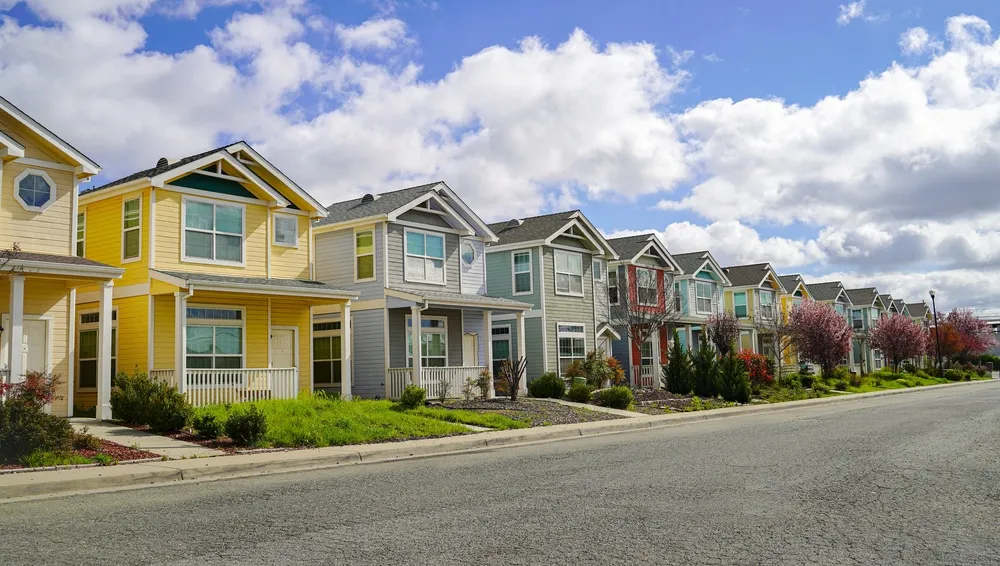
Sergio Grado, founder of Gradco Distributors, a wholesale supplier to the construction and building industries, sees the same opportunity taking shape from the supply side. Investors, he says, are moving away from traditional apartment development and toward rental home communities: cottage-style homes with yards and amenities that offer a more family-oriented living experience. The model is designed to hold tenants for years, generating steady rental income while the underlying assets appreciate. For investors, the math is attractive. For renters, it offers something closer to the experience of ownership without the financial barrier of buying.
Renting, Indefinitely
The forces driving people toward longer-term renting, high prices, elevated mortgage rates, and a widening gap between the cost of owning and the cost of staying put, show little sign of reversing quickly. And the market is adjusting its expectations accordingly.
Kaufman says the structural shift runs deeper than a temporary affordability squeeze. “The last two years haven’t just made this trend more pronounced,” he says. “They’ve made it irreversible for a generation.” The gap between what workforce renters earn and what a mortgage costs has widened to the point where an entire generation of would-be buyers has no realistic path to ownership in the near term.
The old assumption, that renting is something people do on the way to somewhere else, is giving way to something more durable. For a growing share of households, renting isn’t a waiting room. It’s the destination.
This article is based on information provided by the expert sources cited above. The views expressed are those of the individual contributors and do not represent a unified industry position. This article is intended for general informational purposes only and does not constitute legal, financial, or real estate advice. Readers should conduct their own research and consult qualified professionals before making any real estate or financial decisions.