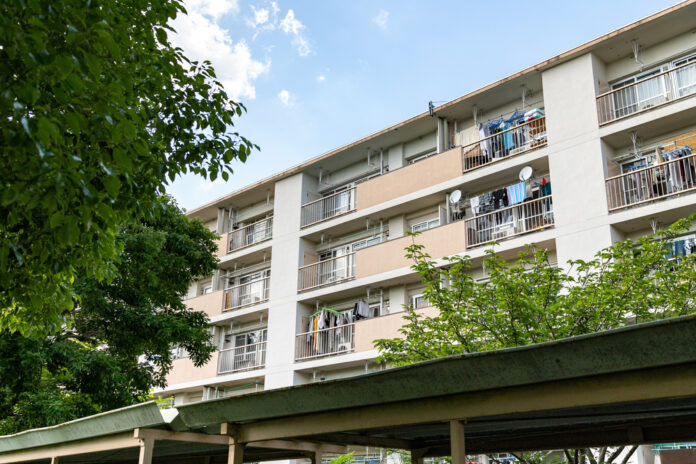

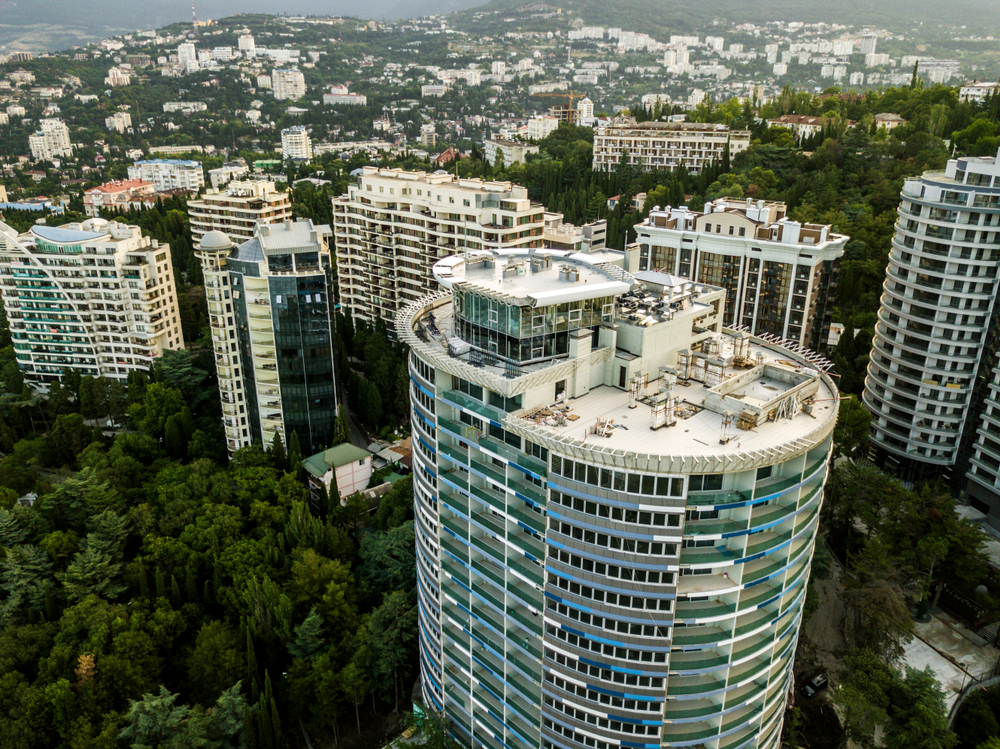
The office-to-residential pipeline has dominated adaptive reuse headlines for years, but hotel-to-multifamily conversions are closing the gap and, in some markets, may already be ahead.
According to Steve Smith, Principal at Cooper Carry, hotel conversions are gaining ground so quickly that some data suggest they are overtaking office conversions in volume. “Hotels being turned into multifamily are gaining very, very quickly,” Smith says. “Stats are saying that they are overtaking office buildings this year in conversion across America.” If that trend holds, the adaptive reuse market is broader and more varied than the office-focused conversation implies, with real consequences for how developers, investors, and municipalities plan their conversion pipelines.
Why Hotels Convert More Easily
Hotel buildings are already subdivided into individual rooms with plumbing, electrical, and HVAC systems in place. That existing buildout reduces the cost and complexity of creating residential units. Open-plan office floors, by contrast, require extensive mechanical and plumbing work to serve new apartments. Hotel floor plates also tend to be narrower, which aligns more naturally with residential unit depths and natural light requirements, two factors Smith identifies as persistent challenges in office conversions.
Office buildings often feature deep floor plates designed to maximize leasable square footage rather than residential livability. Smith has worked on projects with 46,000-square-foot floor plates. He argues that innovative design can overcome these constraints, but the solutions require significant architectural creativity and an acquisition price that can absorb the additional cost.
Hotels present fewer structural obstacles. This may explain why conversion activity is accelerating in the hotel segment even as office conversions face headwinds from rising construction costs and compressed investor returns.
Reuse Extends Beyond Offices
The adaptive reuse conversation extends well beyond hotels and office buildings. Across the country, vacant schools, historic institutional buildings, and churches are also being repurposed, each with its own structural challenges and market dynamics. What these projects share is the same fundamental logic: an existing building with embodied value can be repurposed more efficiently than a new structure built from scratch.
The persistent focus on office-to-residential conversions may be causing developers and investors to overlook asset classes with more straightforward economics. “Everybody kind of knee-jerks right away to office to multifamily, because that’s the biggest use that’s still out there,” Smith says. Historic churches, for example, offer large volumes, distinctive architectural features, and strong appeal to buyers seeking something beyond standard new construction.
For municipalities trying to address vacant building stock, this distinction matters. A city focused exclusively on office conversion incentives may be missing opportunities to accelerate hotel conversions or the repurposing of institutional buildings that could deliver housing units faster and at lower cost.
Reuse Reduces Embodied Carbon
Regardless of building type, Smith argues that adaptive reuse carries a built-in environmental advantage. Reusing an existing structure preserves the energy embedded in its materials, construction, and transportation, energy that would be spent again if the building were demolished and replaced. “It’s the most sustainable thing you can do,” he says. “Instead of tearing that all down and creating a new product with new materials, new workmanship, new shipping, you’re reusing that building and saving that energy.”
As environmental considerations become more prominent in institutional investment decisions, the embodied-carbon case may become a more explicit factor in evaluating and financing adaptive reuse projects, shifting from a philosophical preference to a measurable asset. Smith notes that sustainability is emerging as a significant area of interest among architecture and real estate students, suggesting the argument is gaining traction at the academic level as well.
Schools Beat New Construction
Not every adaptive reuse project converts a building into housing. Some of the clearest cases for reuse involve institutional uses, particularly schools, where assembling land for new construction in dense or high-cost neighborhoods is often impractical.
A former IBM campus in Atlanta’s Buckhead neighborhood illustrates the point. The campus sat largely vacant, costing its owner roughly $2 million a year just to prevent mold and maintain air circulation. Assembling 50 acres for a new school in that neighborhood would have been unrealistic. Redirecting the existing campus solved two problems at once: a jurisdiction that needed school capacity and an owner with a stranded asset. Similar logic has played out in other metro areas, where vacant office buildings in neighborhoods short on school space have been converted rather than demolished, allowing students who might otherwise have been in temporary classrooms to move into permanent facilities.
The front-end analysis matters as much as the vision. Before committing to an acquisition price, developers benefit from rapid yield studies that clarify what a building can realistically produce, how many units, what mix, and at what cost. Projects that stall often do so because the analytical work came too late, after months of pursuit, and revealed that the numbers never supported the price paid. As hotel conversions continue to accelerate and the adaptive reuse pipeline diversifies, the developers best positioned to act will be those with experience reading the structural and financial realities of multiple building types, not just the most obvious ones.