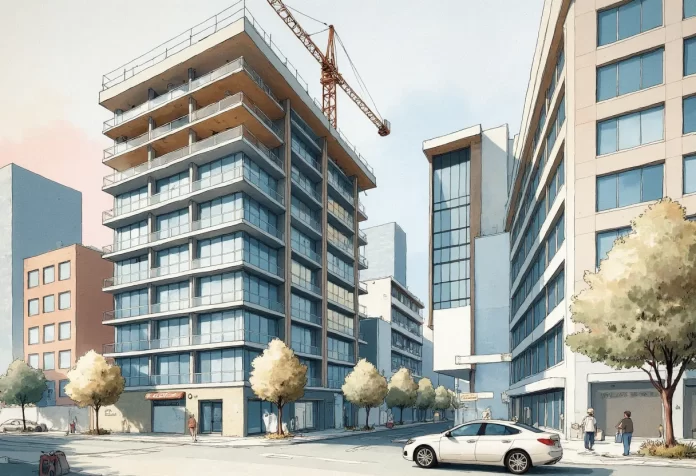

Upstate South Carolina’s commercial real estate market faces a growing challenge: large amounts of vacant office space that may never attract tenants again. But according to Maggie Steck, broker-in-charge at Freedom Commercial, these empty buildings offer a practical solution to the region’s severe housing shortage by converting them to residential use.
“Office is not doing well because of COVID from way back then,” Steck says. “So there’s a lot of available office space. What will happen is that it will become affordable housing. If the building is the right type of building, it could be changed into affordable housing.”
Steck says the decline in office demand triggered by pandemic-era remote work is not a temporary setback. The shift to hybrid and remote work appears permanent, leaving landlords unable to find tenants and making it increasingly difficult to justify holding onto vacant office properties.
Colliding With a Housing Shortage
Steck points out that Upstate South Carolina faces a persistent housing shortage. “We have a building shortage. We have a home shortage,” Steck says. “Affordable houses are needed.” At the same time, rising land prices and development costs make it difficult to build new homes at prices affordable to most residents. “It’s hard to build affordably because with the land cost and the cost of development, it ends up costing a lot to build a home,” Steck explains.
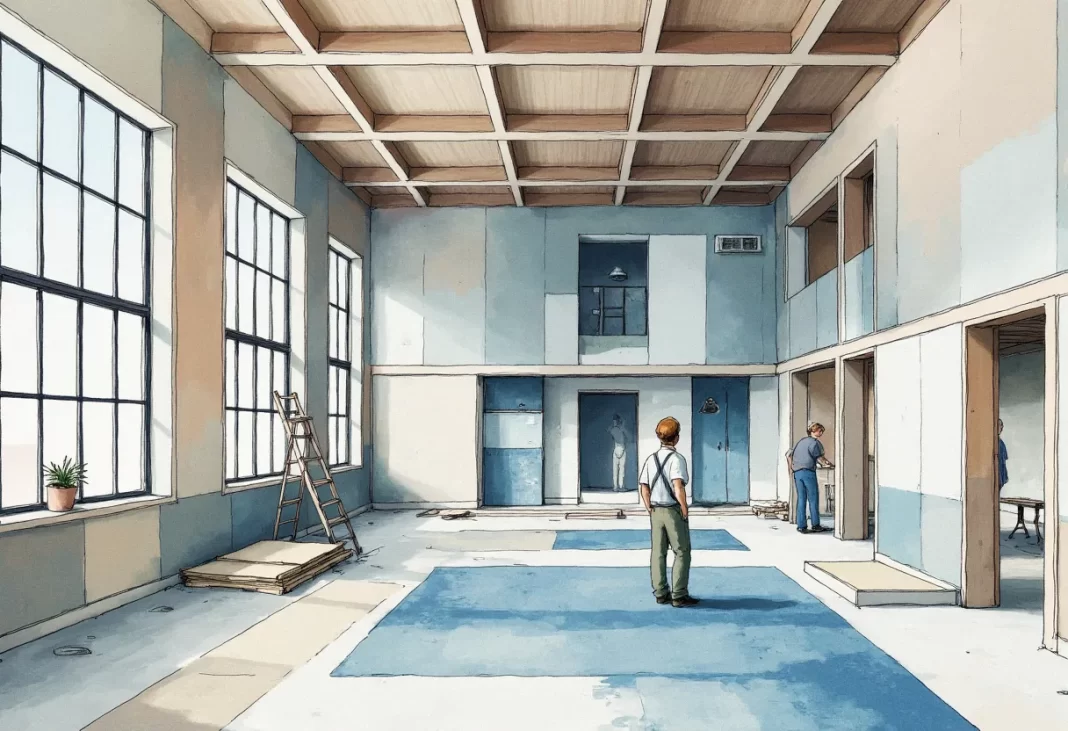
Converting vacant office buildings into housing could help avoid some of these expenses. The main structure, utilities, and foundation are already in place, so conversion would primarily involve interior renovations. This can be significantly cheaper than building new homes from the ground up.
However, Steck cautions that not all office buildings are suitable for conversion. The best candidates have open floor plans, sufficient natural light, ceiling heights compatible with residential needs, and mechanical systems adaptable to apartments. Buildings designed with flexible layouts are easier to convert than those with extensive interior walls. Location is also key – office buildings in walkable urban areas are far more attractive for residential use than those in isolated office parks.
Diverging Trends in Commercial Real Estate
Steck’s comments on office-to-residential conversions come as the broader commercial property market continues to perform unevenly. “Industrial is still going strong because of the warehousing that is needed for all of these supply chain needs for keeping up with AI and tech,” Steck says. “There’s a lot of that still going on.”
Retail is also performing well, driven by a surge in food-related businesses. “Food is very popular here,” she says. “The spaces are becoming harder to find because there are so many people getting into the food industry. Retail is doing very well because you have people who are opening businesses.”
These trends show that the office sector’s distress is not mirrored across all commercial property types. Industrial and retail spaces are attracting tenants and generating income, while office buildings are increasingly vacant and financially strained. This creates a specific opportunity for adaptive reuse in the office sector alone.
Investment and Policy Implications
For investors, Steck’s outlook signals an opportunity to acquire distressed office buildings at reduced prices and convert them into housing. Landlords facing persistent vacancies and negative cash flow may be willing to sell at prices that reflect the diminished value of their properties as offices, rather than their potential as residential buildings.
Successful conversion projects require capital, technical expertise, and often zoning changes or variances. But if executed well, these projects can deliver housing at a lower cost than new construction, while also removing excess office space from the market.
For local governments, office-to-housing conversions offer a way to address housing shortages without acquiring new land or building new infrastructure. These buildings are already connected to public utilities and roads, and converting them adds housing density to existing urban areas rather than expanding the urban footprint.
The Question of Timing
Whether Upstate South Carolina sees a significant wave of office conversions will depend on how quickly landlords accept that office demand is not returning. Some may continue to wait for a resurgence in office leasing, while others could move sooner to sell or convert their properties.
Local policies will play a significant role. Municipalities that streamline zoning approvals and offer flexibility for conversions are likely to see more projects move forward. Tax incentives or other financial support could further improve the economics for developers.
Steck’s observations suggest that local real estate professionals are starting to recognize that some office buildings may never function as offices again. The real test will be whether these insights lead to actual conversion projects that deliver affordable housing at scale.
If the economics work, converting empty office buildings could help address both the office glut and the housing shortage in Upstate South Carolina. The region’s ability to adapt vacant commercial space for residential use may determine not just the future of its office market, but also its capacity to provide homes that residents can afford.